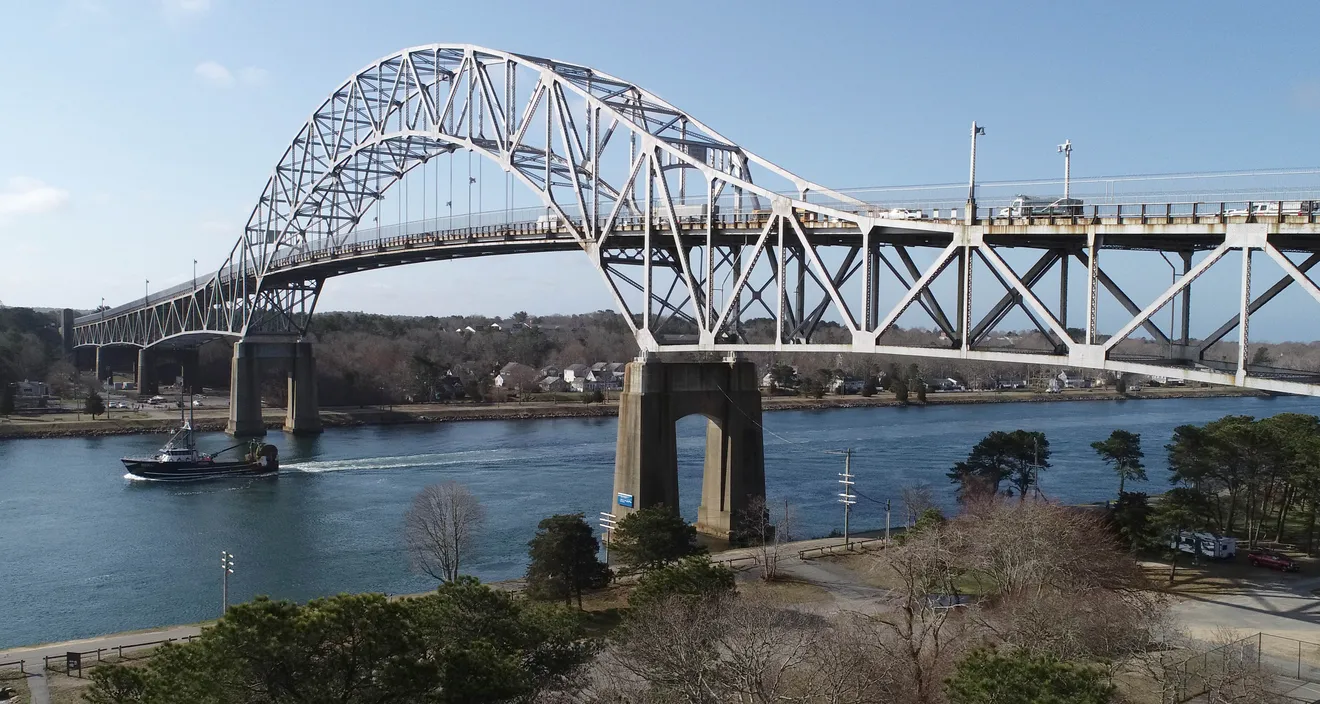
The Bourne Bridge is a historic steel arch bridge with a suspended deck that carries Route 28 (four lanes of vehicular traffic) over the Cape Cod Canal in Bourne, Massachusetts. Designed and constructed by the U.S. Army Corps of Engineers (USACE) with funding from the Public Works Administration, the bridge was built between 1933 and 1935 and opened to traffic on June 22, 1935, alongside its twin, the Sagamore Bridge.
The Bourne Bridge, spanning the Cape Cod Canal in Buzzards Bay, Massachusetts, is a critical US Army Corps of Engineers asset carrying high-volume traffic between the mainland and Cape Cod. This maintenance painting and rehabilitation project targeted below-deck structural steel members exhibiting significant paint loss, corrosion, and accelerated deterioration in fracture-critical areas.
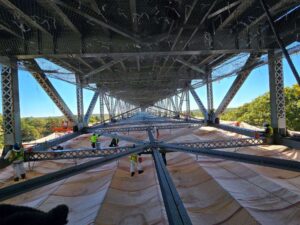
Paragon self-performed 100% of the specialized scope: removal of aging deck pans, surface preparation with full containment with work access, structural steel cleaning, high-performance coating application, and comprehensive inspection/painting of substructure elements.
Instead of relying on manlifts, Paragon engineered and erected a full temporary work platform under the bridge substructure. This provided stable access for crews, enabling thorough cleaning, detailed critical inspections, and uniform painting across all areas—while eliminating fall hazards, improving productivity, and ensuring superior quality control.
The innovative platform solution, combined with our in-house AMPP-certified teams, real-time wind monitoring, and adaptive sequencing, allowed us to complete the project 8 months ahead of schedule with zero lost-time incidents.