Key Challenges
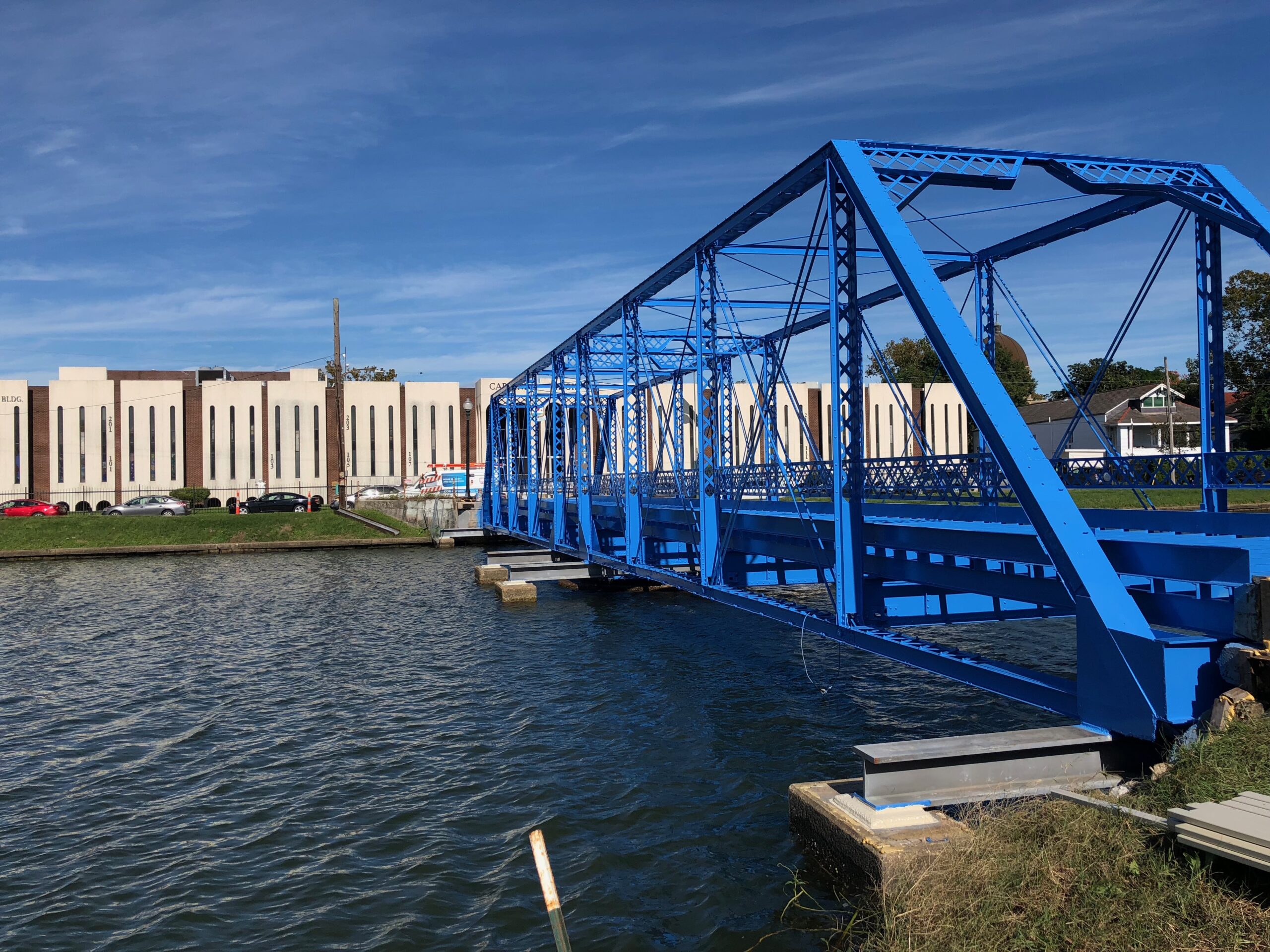
The Magnolia Bridge (also known as the Cabrini Bridge or Harding Drive Bridge) is a historic hand-cranked swing bridge spanning Bayou St. John in New Orleans, Louisiana. Originally built in 1886 by the Smith Bridge Company at Esplanade Avenue.
Its high community value made this a high-profile project for the City of New Orleans. The bridge’s decades of exposure in the humid, coastal environment had led to significant corrosion and peeling coatings. The presence of legacy lead-based paint created serious environmental and public health considerations, especially given the bridge’s location over the scenic and ecologically sensitive Bayou St. John, which supports recreation, wildlife, and is part of the city’s historic waterway network.
For our cleaning and painting project, Paragon faced key challenges:
- Presence of lead-based paint: Removing and containing deteriorating lead-containing coatings over water demanded stringent controls to prevent any contamination of Bayou St. John or airborne migration into the surrounding residential area.
- Complex access and swing-bridge geometry: Working on the historic steel superstructure, decking, and moving components required specialized rigging and containment while preserving the bridge’s mechanical integrity and historic character.
These factors necessitated the highest level of environmental stewardship and community-focused execution in a sensitive urban waterway setting.
How We Met the Challenge
Paragon delivered a successful, high-quality cleaning and painting restoration of the Magnolia Bridge while prioritizing public safety and environmental protection in this beloved New Orleans landmark.
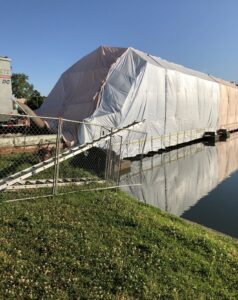
- We installed a full SSPC Class 1A containment system (the highest level of containment), a completely sealed, negative-pressure enclosure tailored to the bridge’s swing mechanism and steel elements. This system captured the debris, dust, and lead particles during surface preparation and painting.
- We performed comprehensive personal and environmental monitoring throughout the project, including continuous air sampling, personal exposure monitoring for workers, and perimeter monitoring to verify that no contaminants migrated beyond the work zone.
- Thorough surface preparation was followed by application of a durable, high-performance coating system engineered for long-term corrosion protection in New Orleans’ harsh humid and marine-influenced climate.